This post may contain affiliate links. Please read our Disclaimer page for more info.
One of the most common problems dog owners face is leash reactivity. This occurs when your dog is pulled by the leash, yanks you around, or is just generally resistant to walking on a leash. If you are experiencing a leash reactivity, we will look at methods that will help you stop your dog from pulling on a leash. They will all be based on using positive reinforcement, which is always the most effective way to train your dog.
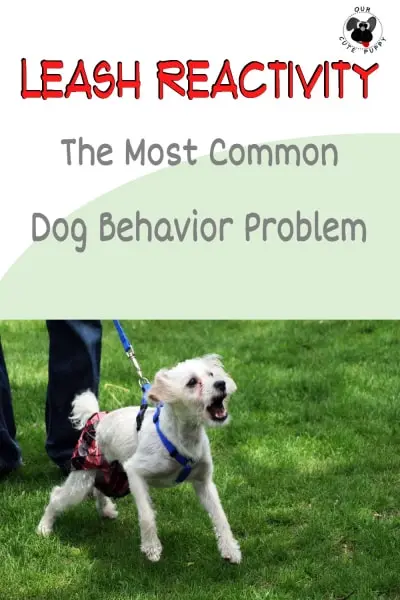
What does leash reactivity mean?
Leash reactivity is a term used to describe how reactive your dog’s behavior is when you try to walk them on a harness or leash. This can be incredibly frustrating, as you may feel like you are walking a hyperactive Chihuahua on a tiny rope. The leash reactivity can be attributed to the fact that dogs have difficulty holding back their impulses or not taking things seriously when they’re asked to do something they don’t want to do.
A leash reactivity dog will look at you with a half-lidded eye and bark, jumping towards another dog or person to get their way. Most of the time this behavior is self-reinforcing, since it happens so frequently that your dog just can’t stop doing it. The problem is that leash reactivity can cause serious problems in terms of how your dog behaves to other dogs and people.
What causes leash reactivity?
Leash reactivity is primarily caused by a combination of fear, anxiety, and frustration that a dog experiences while being restrained on a leash. There are several reasons why a dog may habitually have these behaviors towards another person or animal while walking on their leash:
- Excess energy– A pup who’s full of energy could bark at another dog who’s walking past, lunge at them, and bark again to let another dog know that they want their attention. This is usually mis-reinforced, as your pup wasn’t doing what you asked by barking – the other dog was trying to ignore him anyway! However, because of leash reactivity, this behavior may often continue for a long time before it begins training successfully.
- High energy– A dog who needs to expend a lot of energy barking, lunging, or running may react simply because they’re in high-energy behavior mode. They bark and lunge to distract themselves away from their extra-active feelings so it’s easier for them to release the excess energy as soon as it’s safe again.
- Weak leash training– Dogs who have never been taught that barking and lunging are undesirable dog behavior, may be reactive because they are confused about your behavior. They bark at things on a leash simply to get your attention while you walk so they no longer feel frustrated and uncomfortable as a result of having slack dog training techniques.
- Observant dogs– Some dogs simply react by trying to look around them (and therefore be alpha dogs) and bark to see if there’s something they could bark at. Also, barking at external stimuli such as the dustman, postman, etc. is a means of asserting their rank in society.
The good news: leash reactivity training can be successful – these reactive behaviors don’t have to continue for your dog’s entire life. With enough training from you – as the owner, an online class, or a certified professional dog trainer, reactive barking can change naturally into reliable non-reactive barking behavior.
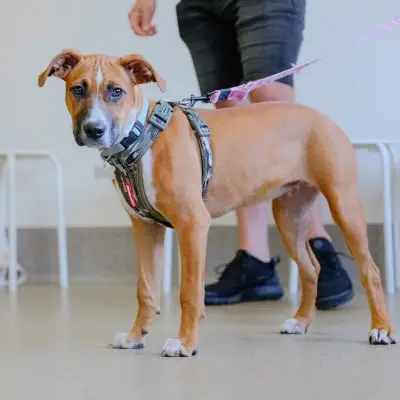
Finding out if your dog is leash-reactive
When you first bring your dog home, it’s important to find out if they are leash-reactive. This means that they become agitated or excited when they see another dog while on a leash. If your dog is leash-reactive, it’s important to socialize them early and often.
This will help them to become more comfortable around other dogs. With the dog walker, your puppy should be introduced to other dogs and given plenty of positive attention. Try to include other dogs that are friendly and only show aggression if provoked. This will help your puppy to learn how to react appropriately.
This kind of behavior could also happen when the leash is taken away from them. That’s because they are aggressive or scared, have separation anxiety, are not training well, and/or barking too much to follow through with commands.
If a leash-reactive dog is barking, lunging, or growling in any way during training, we may have to amend our training plan so that the dog doesn’t bark out of habit. This behavior can also be seen as an indicator that they are scared because of separation and this will cause them to react to an approaching dog or strangers.
To determine if you have a leash-reactive dog:
If your puppy bites/lunges/growls constantly at you while walking, they may be leash-reactive. If they don’t respond well to a quick snap on the leash or are being dragged along because they won’t release their bite, then it is likely a problem. Anxious dogs may bark or growl at the leash.
A dog that is leash-reactive will not be responsive to their name, and/or recall, nor will they be able to relax around other dogs when on a leash. A leash-reactive dog will not be responsive to other cues like the word NO or a hand signal.
Some dogs just have an issue that implies different behaviors; some may growl instead of bark or lunge instead of bark but again, leash reactivity is the result.
Understanding Why Your Dog Reacts So Badly When Walking Along A Leash
There aren’t many dog owners who walk their dogs on a leash every single day without any incidents. However, for the leash-reactive dog, this is something that’s difficult to do and can result in serious frustration.
If you’ve ever wondered why your dog reacts so badly when walking along a leash, you’re not alone. It’s a common problem that many dog owners face.
When leash-reactive dogs are around other dogs, they become overwhelmed with the stimulation and may react in unhealthy ways. These reactions can include, as we have already pointed out, barking, lunging, biting, or trying to run away from their handler.
The body language of dogs can be read by the other dog, so leash reactivity occurs more frequently between normally friendly dogs. From a human perspective, this kind of body language is often interpreted as aggression or dominance – which it may well be in many instances, but some events do not have such an interpretation.
There are a few different reasons why your dog may be reacting this way, and understanding the reason can help you to fix the problem. There’s no one answer as to why a dog becomes leash-reactive; it could be due to genetics or training methods used by previous owners.

Another reason why your dog may be reacting badly when walking on a leash is that they are not used to it. Just like any other dog, your dog was probably raised in a home where they walked along with their owner.
If your dog is still a puppy, they will likely walk along on the leash because they don’t understand that it is different than the regular walk. At some point, however, he will realize that he has to learn new things and develop new skills.
Dogs react differently to people and by sniffing other dogs’ butts. It is natural for canines to sniff each others’ genital areas when they are in their environments or meeting each other without the leash, which may cause issues between your dog and another one on a leash as well.
As with the greeting, leash reactivity is another common behavior problem that often complicates a dog/human relationship. In most cases, it arises when dogs are not supervised enough and left on leash in unfamiliar places like parks or shopping centers.
It can also be caused by training methods that discourage greeting behavior such as hard corrections (such as those seen during basic obedience classes) and encouragement of aggressive responses to threatening environments (e.g., the approach of other dogs). If your dog does react badly to dogs on a leash, you may find that things will change a bit during training sessions or in the dog park with other dogs already on a leash.
Leash Reactivity – Could It Be Corrected?
There are many possible causes of leash reactivity, but the most common is a lack of socialization. A dog who is not properly socialized with other dogs and people often becomes fearful and anxious when he encounters them, which can lead to an aggressive dog.
Leash reactivity can also be caused by a traumatic experience, such as being attacked by another dog. If the leash reactivity is due to a lack of socialization, you should be able to correct it.
Learn how to teach your dog to stop being leash-reactive by following these steps:
- Make sure your dog is leash-reactive only to unfamiliar dogs. If he reacts well around people and other animals, you can start training him by teaching him basic commands such as loose leash walking. This will allow him to greet or interact with people and other animals calmly, from a distance.
- Start by rewarding good behavior while they are on a leash in familiar surroundings (such as your home). Once your dog understands what is expected of him during training sessions, link leash reactivity to particular behaviors. That is, teach your dog that disliked behavior results in a loss of access to something fun or treats (such as his favorite toy) and not being allowed on-leash at all when he displays the undesired response – for example by connecting leash reactivity specifically with barking or lunging at other dogs.
- Make sure you practice with your dog frequently, especially when things get awkward (such as in public). Consistent training will help him learn that leash reactivity is not an acceptable behavior and will eventually disappear on its own over time.
- Make sure you are training your dog in a positive and fair way, using treats and other rewards as incentives. Thus, he will understand that the word YES and the rewards received mean good things for his behavior. Avoid punishing your dog for normal leash reactivity – this will only create more negative associations between leash reactivity and being around people or animals.
- Regular training will help your dog to gradually learn that leash reactivity is not a desirable behavior.
- Keep training sessions short, especially in the beginning, and for dogs who may be hard-headed or reactive to some things (such as strangers). Use regular reinforcement conditioning training methods such as clicker training to help your dog learn that good behavior is always rewarded and discouraged in an age-appropriate way.
- If leash reactivity is a sign that something else is going on with your dog, it’s important to address the other issues at once.
6 Effective Ways To Train A Leash Reactive Dog
If you’ve ever been out for a walk with your dog and found yourself constantly yelling at them to “stay,” then you’re not alone. Leash reactive dog training is essential if you want to avoid increasingly tense walks with your pup. Leash reactive dog training teaches your dog how to react appropriately to various stimuli – in other words, how to stay on leash! There are several effective methods for leash-reactive dog training, and the best way to find the one that’s right for you is by trying out a few different ones. Once you’ve trained your dog, you’ll be able to enjoy peaceful walks together without any drama!
Why do I need to train my dog?
If you have a leash-reactive dog, it’s important to know why they react the way they do and how to train them to obey commands. Leash reactivity is usually the result of either being startled or scared, which can lead to accidents and chaos. Training your dog will help them understand basic commands such as sit, stay, come, and down.

Disciplining your dog with positive reinforcement is one of the most effective methods for training a leash-reactive dog. In addition to training, it’s also important to keep your dog safe and healthy by providing them with the right dog’s environment and ensuring they are properly fed and exercised.
Methods for training a leash reactive dog
Training a leash-reactive dog can be a daunting task, but with the right tools and strategies, it can be a rewarding experience. Proper obedience training is essential for success. Be patient with your puppy – it will take time but with consistent training and good behavior, you’ll be able to get them under control.
Always use caution when walking in areas with a lot of other dogs. Avoid direct eye contact with other dogs as this can be very triggering for some pups, you better take a U-turn. Besides obedience training, use positive reinforcement, like treats or playtime, to reward good behavior.
The basics of leash reactive dog training
Leash reactive dog training can be challenging, but with the right approach, it can be successful. Each technique should be used in a specific order, and boundaries must be set for the dog while training. To get started, understand your dog’s behavior and use the six steps of effective training:
1. Understand your dog’s behavior – As I mentioned before, leash-reactive dogs often have anxiety and fear issues. The first step in training is to understand this behavior so that you can train properly. Observe your dog while they are reactive, and chart their reactions to different things: people, animals, noises, etc. This information will help you better understand why the dog has reactivity towards leashes.
2. Identify the cue that causes leash reactivity – One of the most important things to understand is what causes leash reactivity in your dog. This can be difficult, as many dogs will react to various cues even if they don’t understand why.
However, some cues are more likely to trigger a reactive response from your dog: being pulled on by the leash, being trapped or enclosed with other people or animals, seeing another dog on a leash, etc. Once you have identified which cue causes the reactive behavior in your dog, you can begin to train around that.
3. Create a training plan that takes into account your dog’s natural temperament – You need to have a contingency plan in place for when the leash reactivity behavior happens. For some dogs, being on a leash may be their favorite thing in the world and they will react aggressively when it is taken away from them. Other dogs may not react at all to being on a leash and an additional training method such as positive reinforcement might work better for them.
4. Establish boundaries with your dog while training – One of the most important things you can do is establish boundaries while training. This means setting limits on how much leash reactivity your dog can exhibit and making sure that they understand what behavior is allowed and what behavior isn’t. You also need to be consistent in training, even when things are going smoothly so that your dog understands the rules.
5. Reinforce good behavior, and punish bad behavior – Rewards like treats or playtime should be given as a form of positive reinforcement when the dog behaves appropriately on a leash. If the dog’s leash reactivity behavior happens when you’re training, punishment such as leash pulling and/or verbal command NO should be administered immediately.
6. Keep training consistent to maintain results and make corrections as needed – Dogs will usually respond better to training when it is consistent. If your dog’s leash reactivity behavior changes from day to day or from situation to situation, make sure to adjust the training plan accordingly.
Be patient with your dog – some dogs may take longer than others to learn new concepts, but with patience and consistency you can train them to behave appropriately around other people and animals on a leash
Conclusion
Training your leash-reactive dog is an important task that will help keep your dog safe and under your control. There are several effective training methods that you can use to get the job done, so choose the one that is most suitable for your dog and your lifestyle. Make sure to stick to the basics and focus on the training objectives, such as obedience, house training, and leash walking. Be patient and consistent with your training methods, and you’ll be on your way to a leash-reactive dog that is both obedient and safe!
Frequently Asked Questions
-
What type of reinforcement training works best with leash-reactive dogs?
There is no definitive answer as different leash-reactive dogs will react differently to different types of reinforcement training. Some owners find positive reinforcement training, such as giving pets treats or verbal praise, to be the most effective form of behavior modification for their dog.
-
Can electronic shock collars be used safely with leash-reactive dogs?
According to the ASPCA, most dog owners find that electronic shock collars are safe and effective tools for training dogs. However, there is always the potential for injury if a dog receives too much shock from the collar which could create a negative association between the stimulus and your dog. Therefore, it is important to use the collar in a way that is safe and helpful for both you and your dog for optimal results. For more information, visit the ASPCA website.
-
What are some common training exercises that work well with leash-reactive dogs?
Leash-reactive dogs may respond well to training exercises such as sit, stay, down, come, and greetings.
-
How do I deal with my dog when he’s disobedient?
The best way to deal with a disobedient dog may vary depending on the particular situation. However, some tips on how to handle a disobedient dog may include establishing rules and boundaries early on, training the dog properly, and using discipline methods such as corrections or verbal commands when necessary.